

A time of change always becomes a trial of endurance for companies, as suddenly the future is cancelled, replaced with the degree of uncertainty and unpredictability to which we’ve become accustomed. When certainty enters a vacuum and our plans and intentions go out the airlock, perhaps there are only two types of people who can keep their cool; those with nothing to lose, and those with the resources to stock their own arc and wait out the flood. What is uncertainty-proofing, how does it vary from country to country and how can business owners keep themselves and the situation under control on the personal, collective and business levels? We get to grips with these questions with the help of experts in the area of psychology (for the personal level), corporate culture (at the level of team leaders) and also economics and business (the entrepreneurial level).
The Alarm Scale
In the 60s and 70s of the twentieth century, the Dutch social psychologist Geert Hofstede conducted surveys of cultural differences in various countries of the world. The fruit of his labour was a model explaining national cultural differences by assigning each country ratings in a range of parameters. One of these measurements was uncertainty avoidance. This measurement expressed as a score out of a hundred assesses to what degree people of various cultures are inclined to perceive uncertain or ambiguous situations as threatening. The higher the score, the greater the degree of concern they feel.
Uncertainty Avoidance (UA) ratings for various countries
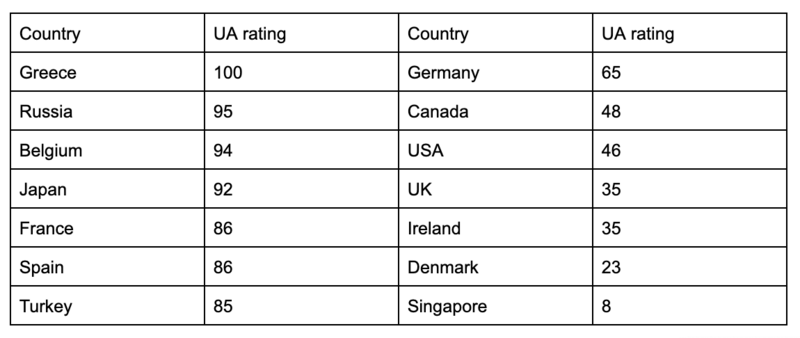
This clearly shows that Russia has a high rating for uncertainty avoidance, while Anglo-Saxon countries are at the other end of the scale. The business culturologist Chris Smith believes that this low rating reflects the English adage that ‘only two things in life are certain; death and taxes’. If people are ready to accept that the rest is unpredictable, they can get by with a minimum of rules and regulations.
Conversely, cultures which feel uncomfortable with uncertainty tend to develop a great many laws and unwritten prescriptions for all circumstances in life, leading most events in society to follow familiar and predictable patterns. Countries with this approach have high uncertainty avoidance ratings.
Simply put, this means that the typical Russian becomes stressed more readily in strange situations than an average Briton.
But how did we live with this before?
Of course, the current crisis is far from being the first to be encountered by humanity. An examination of previous crises through the lens of uncertainty avoidance leads to many interesting observations. When describing the 2008 credit crunch in the US, Smith notes that higher levels of uncertainty tolerance amongst Americans played a role; “Creditors lent money to people whose ability to return it hadn’t been assessed. They were ready to take risks”. At the same time, the Americans, who were impacted by the crisis before EU countries, were able to leave it more quickly. “Americans are ready to take risks. Sometimes this ends badly. This time it ended quite badly indeed. But the other side of the coin is that these Americans are able to ‘reinvent themselves’ much more easily and rapidly than those from some other cultures”.
When considering the Venezuelan crisis of 2013, Smith underlined that in countries with a high level of uncertainty avoidance it is common to ‘fight fire with fire’, piling up new laws upon old, further complicating the bureaucratic obstacles to business and blocking the path to recovery. Back in 2015, he remarked, “the sign on the way out of Venezuela says ‘Temporarily Closed for Business. We Apologise for the Inconvenience’”. The crisis in Venezuela continues to this day.
Every man for himself?
Just as countries have to cope with the crisis, so do individuals. When it comes to individual resilience, scientists link high levels of uncertainty tolerance to higher levels of awareness. In other words, levels of personal development are just as important as national character in determining the ability to adapt to change. Unfortunately, this poses a great many questions. Public institutions are wary of the concept of awareness as an acquired skill. When someone reaches a new level of understanding of life, they go through a process of reexamination of everything that has been hindering them. This includes the established rules of the social order. Basically, if you have a high level of awareness, then this is not thanks to the society in which your personality was formed, but in spite of it.
In Russian business-coaching circles, there is a popular didactic half-legend about a poor Italian immigrant who arrived in the USA at the start of the Great Depression. It’s said that he opened his own store and worked every day, selling wine and pizza. As a result, he built up a whole chain of establishments and became rich. When, in the autumn of his years, an interviewer asked him how he had managed to develop his business at such an inauspicious time, he answered “It helped me right from the start that I didn’t know English well and I couldn’t read. I didn’t read the newspapers so I didn’t know that there was a Great Depression” It may be that closing yourself off from a situation of uncertainty is the best solution for someone with a low level of awareness.
The conclusions to be drawn from this story make grim reading. If you have had a relaxed attitude to uncertainty since birth or you have taught yourself to withstand it, then you are lucky. If you haven’t had this luck, you’ll have to learn to deal with it on the hoof, without textbooks and, inevitably, you’ll make some mistakes. If you are also a business owner, you'll have to fight on three fronts at the same time; in your personal life, as a team leader and in the role of crisis manager.
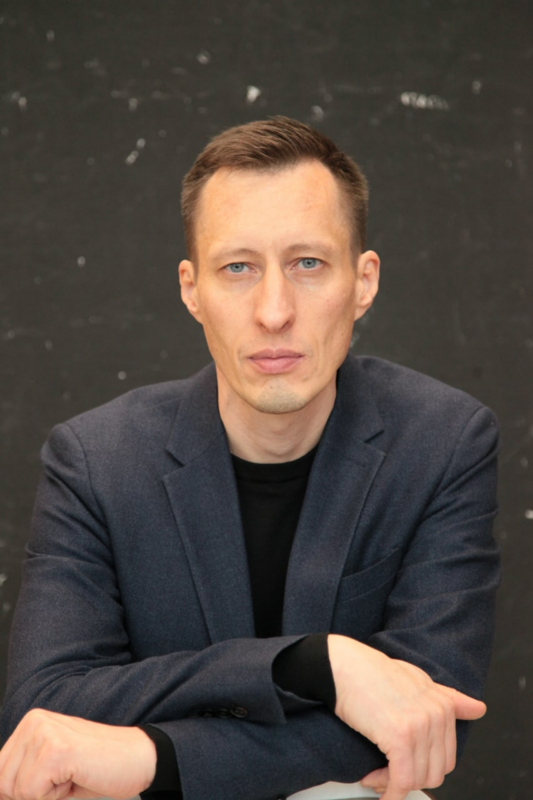
Aleksei Zakrevsky, a business psychologist and trainer, is a member of the All Russian Professional Psychotherapeutic League. He devises training methods for the development of emotional intelligence and the transformation of negative emotions. He is the creator of Liberation, a team building game.
To begin with, let’s be clear what we’re talking about. What is uncertainty? It is the absence of certainty. There is no baseline to interact with. There are no limits, no framework, no moorings, no shore at all, so to speak. When none of that exists, what do we have?
When there is no certainty, in its place arises variability. It’s better to say multi-variance. This excessive range of options causes stress, at the root of which lies the fear of making a mistake. The fear must not be allowed to become paralysing, it must be stopped.
A businessman, especially a successful one, usually has more tools at their disposal than a hired worker. In the language of business, it’s necessary to be insured against mistakes. There is no pre-prepared model; hypotheses must be chosen and quickly tested. The cost of testing each of them must also be appraised. They can be developed using rapid testing algorithms such as are used in start-ups. This gradually produces a better understanding of the situation, which allows the number of seemingly advantageous courses of action to be narrowed down. At this stage, it becomes clearer what needs to be done and a feeling of control over the situation is achieved.
Although this may sound complicated, this is simply the familiar method of trial and error, only approached systematically. If you are a businessperson, then consistency is your friend, it will help you return to a state of certainty. Try this approach in all three areas; personal life, teamwork and business strategy.
Of course, you must start at the personal level. If you are panicking, no systematic solutions will help you; first of all, you need to regain self-control. Breathing exercises help with this, (they are easy to find online). Routine activities such as cleaning, knitting and rearranging the furniture are also beneficial.
Our brains are easily deceived; if you’ve tidied a room or even a desk in a room, then the situation is under control. It’s not so important that this control only extends to the limits of your desk.
This control will restore your energy and feeling of self-confidence. This is a good time to systematically reduce the range of options.
Everything becomes more complicated when it comes to teamwork. People are different, they all have different levels of stress and different ways of reacting to it. This is why, during the work day, along with regular working activities it’s helpful to include some routine tasks which help everyone to relax; tidying up together, preparing those reports which are always put off and so on. It’s also important to get certain interactions under control. Watching and discussing the news or politics in the current situation could potentially be toxic. These discussions can’t be banned; a time and place must be set aside for them, for example, a half hour at the end of the working day could be reserved to give all those who so wish the chance to share their thoughts, opinions and emotions. It may seem strange, but by speaking about your fears out loud, it’s possible to make them smaller.
As for business strategy, let’s not forget that business people know how to deal with risk. In situations of uncertainty, risks increase precipitously. With this in mind, it seems appropriate to consider the approach of existential psychology. This involves asking people to think clearly about their own mortality and the fact that one day they will die. Only after doing this should they decide how to act.
My hypothesis is the following; when no one knows the right way to act, any action may bring success or ruin. Inaction carries exactly the same risks. However, the advantage of action is that it will help you to find a way for your business to refocus on new products, niches or markets. And of course, action helps you deal with the stress of uncertainty.
A crisis situation is a good time to reassess interests and aims. It is unlikely that it will be possible to keep everything how it was before the crisis. However, the crisis itself will bring new opportunities. Huge fortunes are made, as a rule, in times of trouble. If you can transform stress into passion (and these feelings are fed by the same source), you can achieve a lot.
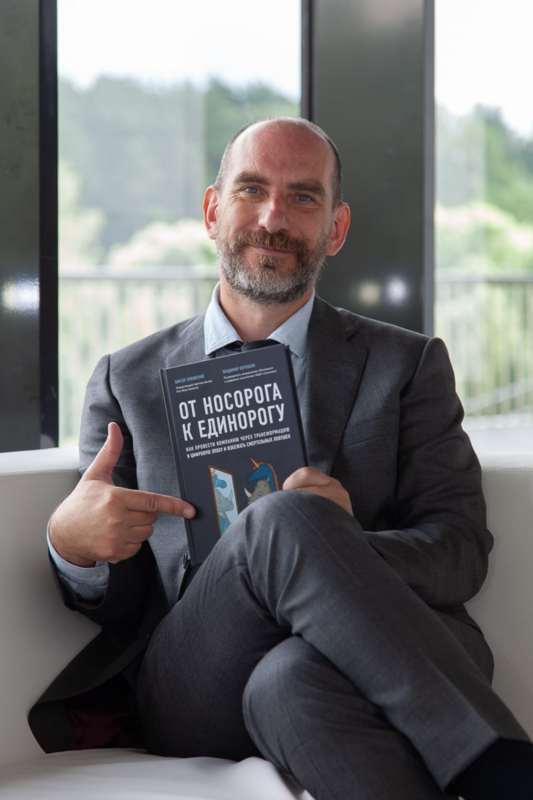
Vladimir Korovkin is a businessman and senior business practice teacher at the Moscow Skolkovo Management School. He is co-author of a book entitled From Rhinoceros to Unicorn. How to Transform Your Company for the Digital Age while Avoiding Fatal Pitfalls.
I think it’s very important to begin at the personal level. If it’s not possible to find solutions to personal problems, then team management and the business sphere are likely to be beyond you. In critical situations, people will look at you and ask questions to which there are no answers. This is why it’s so important to feel that you are able to deal with the situation, so that, without giving clear answers, you can transmit the confidence that solutions will be found.
It can be a useful exercise to assess critical time frames for taking key decisions, both in your personal life and in business. When you’ve done this, you have the basis of a plan.
From a business perspective, it’s very difficult to give any general advice. There are different types of business. Some find that their client databases are out of date and their sales are flagging, others find their marketing channels have ceased working, yet others come undone due to supply chain disruptions or spikes in delivery costs. There’s no panacea. It’s always useful to conduct a quick revision of all aspects of the business; production, budgeting, logistics and so on. Break the problem down into its component parts in the risk matrix, evaluate the probability of potential setbacks arising, and what the consequences might be. Don’t waste time thinking about unlikely scenarios, it’s better to narrow down the range of options in the decision space. Basically, draw yourself a roadmap. Combat external uncertainty with internal certainty to the degree that this is possible. Gradually, step by step, form a basis for decision making.
The most difficult thing to do in this situation is to build the right relationship with your team. Effective communication alone is insufficient; your behaviour and habits should show your confidence. If you have never been late, have always drunk coffee with your team or meticulously followed a dress code, now it is especially important not to change anything. You must maintain these habits. Any change will be perceived by your employees as a sign of alarm. At times of crisis, your colleagues’ eyes will all be on you. You are like the captain of a ship, everyone’s fate depends on your decisions. When talking to your team, don’t pretend that nothing has happened. Nor should you keep your silence or make awkward jokes. Talk in your usual manner; you are an element of stability in the encircling chaos. Hold meetings, write to people, and don’t keep them in the dark. Transmit confidence.
Combatting the stress of uncertainty on three fronts at once is a difficult task. But this approach has a clear advantage. When your personal life seems under control, it’s much easier to keep an even keel in business, and vice versa. If you carefully plan your actions in the right order, then a step forward in one area can give the impetus to solve problems in another. If you focus on one thing alone there is a serious risk of catastrophe on all fronts at once.
Naturally, no one can withstand the buffeting of circumstances forever; no one is indestructible. In critical situations, simple, everyday activities can help. It’s hard to overstate the significance of symbolic actions made in preparation for a future when the storm has passed. Sewing sundresses because it’s ‘it’s time to sew can help you psychologically to withstand current difficulties.

Anatoly Yasinsky is a business consultant specialising in corporate and HR brand development. He teaches Executive MBAs at Moscow's RANEPA Academy and the Universal University. He is also a brand content curator at the Wordshop Academy of Communications there.
Let’s start with how the brain functions. During its usual functioning, it is busy forming a picture of the world. It receives information from the sensory organs and compares it to this picture. This is happening constantly, in countless cycles each second. As long as the inconsistencies between the picture and reality are insignificant, everything is fine. If an unexpected event exposes these inconsistencies, the brain perceives a threat and either begins to compulsively take in information in order to reduce this gap, leading to panic or imposing a block, cutting off incoming information, leading to stupor. In either case, the brain is ‘overheating’, and you can no longer think clearly. This is what happens in a crisis situation.
There is a basic principle: cognitive overload is worse for us than an inaccurate picture of the world.
In moments of crisis you are overwhelmed by incoming information, however, a significant part of this is noise or junk which has no real bearing on your life. This is why, at the personal level, it is best to create your own picture of events. This can be anything at all, whatever suits you best at this stage. Form this picture and decide on a date when you will review or correct it. This could be in a month or so. Cast all the remaining noise out of your mind. It’s not so terrible if this noise includes some significant details. You can come back to these questions later. The main thing is to free up space.
Protect yourself from the flow of incoming information which is extraneous to the completion of the tasks you have set. The brain needs free energy to work. By clearing this blockage, you can free up resources and reserves for action. When you have enough space to breathe, your dynamism will return. When you have formed a new picture of the word, you are ready to go and act.
When working as a team, the first thing you will encounter in a situation of uncertainty is a precipitous fall in productivity as each team member’s brain is burdened with the processing of unnecessary information. In this situation, it’s impossible to work. This demonstrates the importance of simplifying the model to free up resources.
At this point, it is necessary to have another look at the structure of the hierarchy. During a crisis, each of its levels should simplify life for the level below. Regulate work as much as possible and simplify tasks. Note that for each level of the hierarchy, the degree of simplification should be different. At the bottom level, work should function as simply as a conveyor belt, while at the next level up, different conveyor belts need to work in coordination. The simpler the tasks are, the easier work will be. An additional benefit is that actions that are simple and easy to understand are calming.
It is important to pay attention to team spirit. During a crisis, people tend to cluster together in groups of the like-minded. If this is allowed to happen organically, people are liable to give way to whatever ideas occur to them. These are most likely to be destructive; panic, discussions of who will be fired first, or when the money will run out. It’s impossible to stop this process, which is why business owners must direct it by creating a space for the exchange of ideas. These ideas should be fairly simple, but the extent of this simplicity should vary according to the level of the hierarchy. It’s obvious what ideas to choose; they should inspire confidence, rally morale and motivate the team to work.
There is a tool which can help; the corporate brand itself. With the right design, it can create a clear and simple worldview and a vector for collective progress towards your targets.
It may be that the most interesting question is how to act at the macro level of the business as a whole. We are currently going through a transition towards a new world and a new reality. Of course, it’s not so smart to approach this new reality with the old business methods. There are no ready-made solutions, and we’ll have to do more than just put things together from existing parts; we’ll have to invent something completely new. This is why it's important for business owners to find people on who they can rely on. It’s by no means a given that you’ll be able to find them from among those already on the company payroll.
It’s important to understand that at the moment of transition to a new reality, it’s no good to ask experts for advice. Like generals, experts are always preparing for past wars. To devise new solutions a visionary is needed, someone who will pull an idea out of thin air. To a certain degree, Business Owners themselves can be these visionaries, since they have created the business. In this situation, I like the idea of creating a collaboration between the owners of different businesses. They do not necessarily have to be in the same areas of business. The aim of this collaboration is for mutual assistance, to create an ideas factory and generate fresh views. It’s possible that not only will new links between different companies be forged, but also a new environment, with its own standards of interaction, which will be able to serve as one of the building blocks of the new world.