On the eve of the funeral of the longest ever reigning British monarch, Akcent UK went to the experts for comment on what is a momentous event for Britain. For these people, Elizabeth II was not just a public figure, but an object of study.
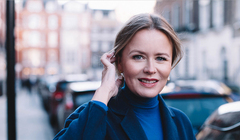
Ksenia Markova is an expert in European civil etiquette and a member of the National Association of Protocol Specialists (NAPS). She is the author of European Etiquette. Conversations about Good Manners and the Subtleties of Behaviour in Society and another book entitled Etiquette, Tradition and the History of Romantic Relations. She is also the creator of the Etiquette748 blog.
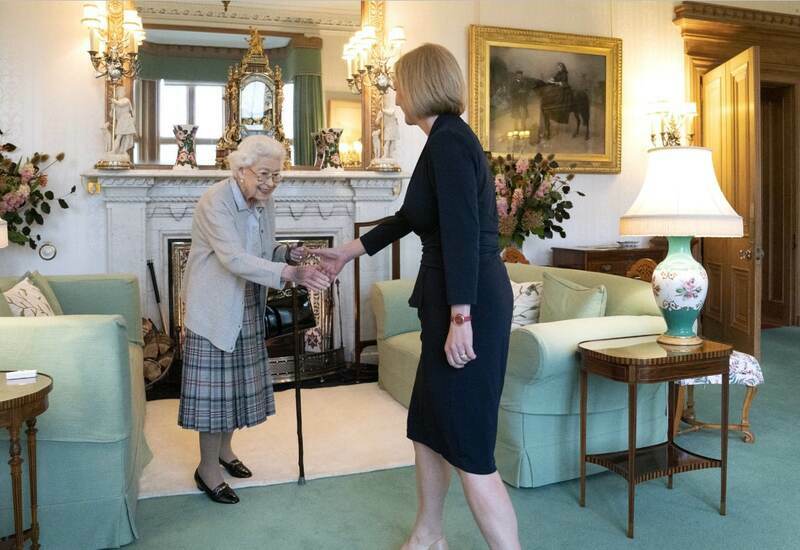
Well, the inevitable has happened, and a whole era has ended…I feel immensely saddened. She was a true lady in the best sense of the word. Like many, I suppose I had imagined she would live forever. Unfortunately, after the death of the Duke of Edinburgh in April last year, Her Majesty noticeably withdrew from public life, with many of her responsibilities being transferred to other members of the royal family, but just think of it! Only two days before she passed away, the Queen did her duty by receiving the new prime minister. She stood unaided and she kept the conversation going. You could say that she served the country until the very last day, couldn’t you? Does that not deserve admiration and endless respect?
Elizabeth was on the throne longer than many. Her reign began during a very difficult time for Europe, when a great many monarchies fell during the tumultuous twentieth century. It’s likely only a wise and careful ruler could have navigated all the difficulties she encountered, both those of state and those that came up within her family. And she did it with her head held high, without losing her dignity and impeccable poise.
Farewell, your Majesty! I will miss you very much.
May your path be easy…
Valery Adzhiev, Principle Academic at Bournemouth University’s Faculty of Media and Communication (UK):
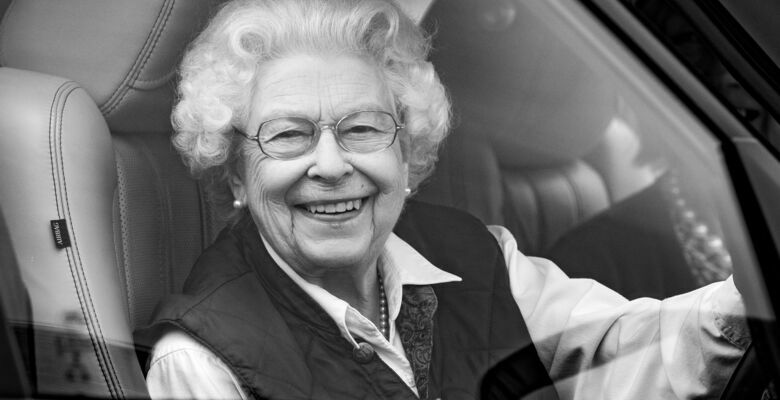
Like the overwhelming majority of the British population, I cannot imagine the country without the Queen. She was on the throne for seventy years and, in the minds of many people, she became a symbol of the nation in flesh and blood. As a monarch, she was practically ideal for the role, as she wasn’t political. Instead, what struck you was her universal humanity. With her, the royal court functioned like a well-oiled machine (it’s not for nothing that they called her ‘The Firm’). She herself worked tirelessly all her life. Two days before her death she personally received the resignation of Boris Johnson and met the new prime minister, Liz Truss, whom she confirmed in the position. This was the conclusive act of her reign. In the photograph with Truss, she looks very delicate. You can’t call her departure a shock; she had reached a respectable age and recently her health had significantly worsened. Nevertheless, practically all citizens of Britain are saddened and mournful at the passing of the Queen, who had been with them for so long.
Mikhail Kazinik, art historian, musician, writer, poet, philosopher and director:
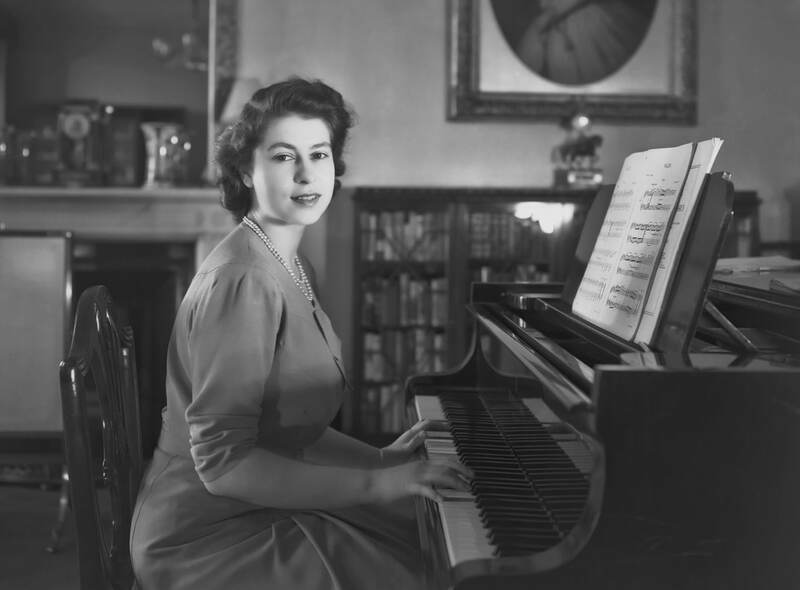
For me, all my life has been linked with the Queen one way or another; I was born in 1951, while she came to the throne in 1952. Presidents, general secretaries, dictators and liberals came and went, thaws set in, followed by freezes, wars went on (aggression and folly), but there are unshakable values, and in my life, one of them was Elizabeth II. Why? There are many injustices in this world and it sometimes seems that humanity is imperfect, as yet unformed and ready to destroy itself. Yet…, that ‘yet’ is and will be Bach, Mozart, Shakespeare, Molière and Byron. The existence of Elizabeth II was the same. In the twentieth century, and even the twenty-first, she was the living incarnation of the good Queen of the fairy tales, untarnished, refined and natural. There is a photograph where she’s sitting at a piano… when I look at her in different years of her life, it seems to me that in the Queen, nature created a wonder; she did not change, in her old age she was not old. That’s how she died, remaining in memory a petite, slender lady with the most delicate facial features. The Queen was an embodiment of conscience (many call the Dalai Lama an embodiment of conscience, but as a European, Elizabeth II is closer to me). This is because the Elizabethan Era, which has just ended, symbolises a clear conscience and light. Although the Queen withstood many trials, she remained a symbol of a higher, purer Britain. Even her death in Scotland for me evokes castles, craggs, and good old traditions (as Osip Mandelstam wrote: ‘I have not heard Ossian's stories/ I have not tried the ancient wine/ Why do I see a clearing/ by the blood moon of Scotland?). That’s where she left us, in a fairytale castle. For me, that’s symbolic.
I now feel orphaned. There’s a war on, and there are all sorts of other tragic events going on which I’d like to come to an end, but I’d like the life of the Queen to go on. Maybe it sounds selfish, but I’d like her to stay in this world and not leave before I do. For me, culture is the highest manifestation of human life. Well, with her, an important part of it has gone.
Ksenia Dyakova-Tinoco, head editor of Akcent UK:
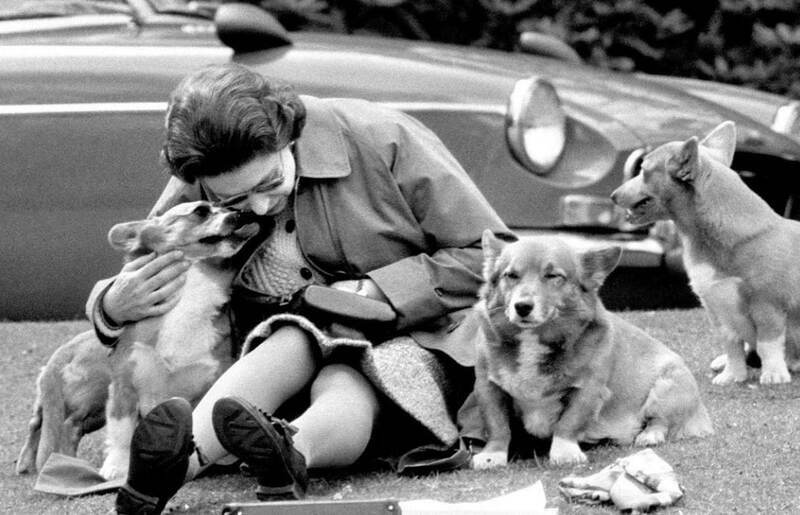
As part of my job, I am constantly following the British news and I can say that the Queen was one of the best newsmakers and she will be sorely missed. It wasn’t only her status as the monarch and how photogenic she was. Over those decades, the world was shaken many times, and technology radically changed how we dress, look, interact and even age. But Elizabeth II, her fancy hats, suits and dresses, her old-fashioned shoes and her toy corgis remained almost unchanged over the past thirty years, and against that turbulent, disquieting background, her consistency produced a powerful therapeutic effect, an illusion of at least some kind of stability.
Another puzzle for me was the Queen’s unchanging dignity and surprising self-possession, as her children and grandchildren sometimes tested her. Nobody really knows what Queen Elizabeth II was actually thinking. It was only easy to read her feelings towards her husband, Prince Philipp; everyone understood that she loved him devotedly and forgivingly. It has long been unfashionable to live as the Queen did; to a schedule, obeying duty and regulations. Personal happiness, which, for example, her uncle, Edward or her grandson Harry chose, would seem a more understandable decision. Maybe the secret of the Queen’s self control was that she also had personal happiness, hidden somewhere deep inside her like a jewel. This is also an unachievable ideal; giving service to a great idea in the inescapable centre of the public eye without being deprived of the joy of just being a wife, mother, grandmother and great-grandmother.
Tatiana Vlasyuk, London guide, art historian and founder of Art Walks around London:
It's truly a miracle that in our deeply cynical world, driven by money and personal ambition (as has become especially clear in the information age), thanks to the Queen, the institute of the British monarchy has been preserved, providing us with an example of service and devotion to duty. In my home country, all this time, one doubtful leader has been replaced by another, endless social experiments have been conducted on us: either we were forced to live in an enormous kindergarten, or we were abruptly thrown out into the cold. Now they’re constructing yet another ideology. But I always knew that somewhere, across the sea, lived a fair queen who loved and cared for her people, looked after them and comforted them. This drew me, and, I am sure, many others from my country who eventually ended up in Britain. The Queen turned out not to be immortal, as we had hoped. Recently she has been severely ill and rarely made public appearances. Her passing has been both expected and unexpected at the same time. And a mere two days before her death, through sheer force of will, she got up out of her hospital bed, looking so small, with arms dark from the hospital drip, and charged the new prime minister Liz Truss with the task of forming a government. In this way she saved her country yet again, this time from the crisis of a vacuum of power. It’s a great loss, and during these days I am in mourning together with the British people.